← Back to Articles
Building Scalable MERN Stack Applications
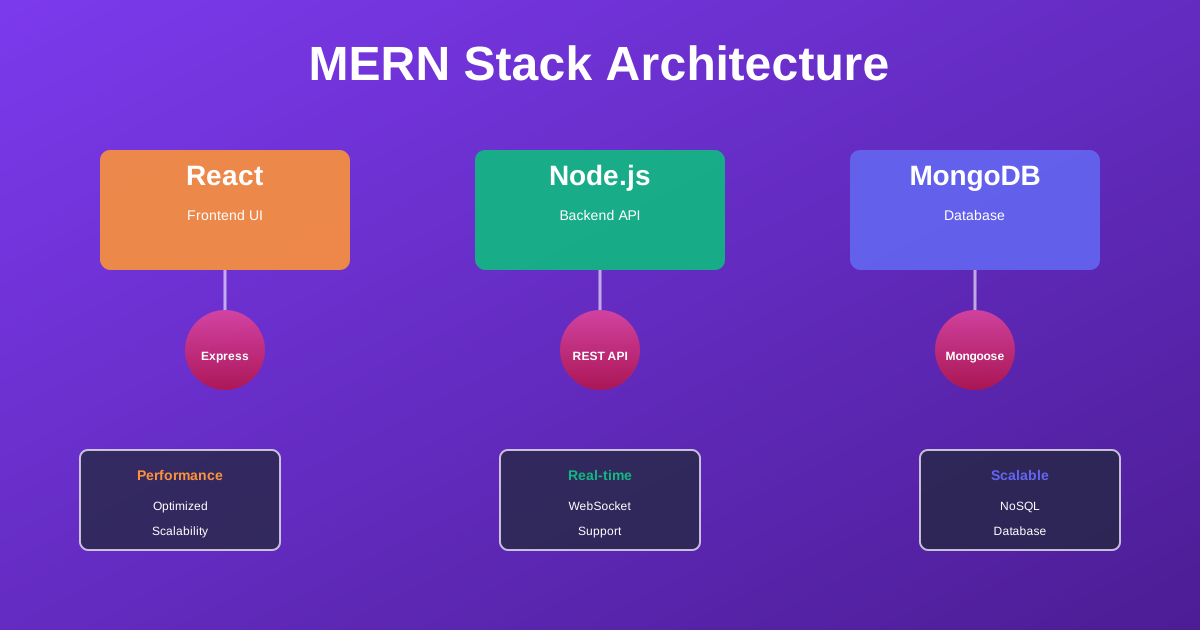
Building Scalable MERN Stack Applications
Introduction Building scalable MERN applications requires more than just knowing the technologies. It's about understanding architecture patterns, separation of concerns, and how to structure your codebase for long-term maintainability.
Project Structure A well-organized MERN project typically follows this structure: ``` ├── frontend/ │ ├── src/ │ │ ├── components/ │ │ ├── pages/ │ │ ├── hooks/ │ │ ├── context/ │ │ ├── utils/ │ │ └── services/ │ └── package.json ├── backend/ │ ├── routes/ │ ├── controllers/ │ ├── models/ │ ├── middleware/ │ ├── utils/ │ └── server.js └── package.json ```
Database Design - Use Mongoose schemas with proper validation - Implement indexing for frequently queried fields - Follow normalization principles - Consider denormalization for performance-critical queries
API Structure - RESTful conventions with proper HTTP methods - Versioning (v1, v2) for backward compatibility - Comprehensive error handling - Request/response validation using libraries like Joi or Zod
Frontend Best Practices - Component composition and reusability - State management with Redux Toolkit - Custom hooks for logic abstraction - Lazy loading and code splitting
Performance Optimization - Database query optimization - Caching strategies (Redis, browser caching) - CDN usage for static assets - Load balancing for backend services
Related Articles
Real-time Features with Socket.io: From Basics to Production
Master WebSocket communication using Socket.io. Learn how to build real-time applications including bidirectional messaging, event handling, room management, and scaling considerations for production environments.
Mastering Next.js 16: App Router, Server Components & Performance
Deep dive into Next.js 16+ with App Router, Server Components, and advanced patterns. Learn how to build blazingly fast, SEO-optimized applications with proper data fetching strategies and performance metrics.
WebRTC: Building Real-time Video Communication
A complete guide to implementing WebRTC for peer-to-peer video communication. Covers STUN/TURN servers, signaling, SDP exchanges, and building production-ready video conferencing applications.
Want to discuss this article or suggest topics?
Get in Touch →